Children rely on their eyesight every day, from learning to read and write at school to playing sports and exploring the world around them. But how can you tell if your child is having trouble seeing clearly?
Children don’t always realise their vision is different from everyone else’s, and they may not know how to explain what they’re experiencing. That’s why regular children’s eye tests are so important. They help identify changes in vision, detect common eye conditions and make sure your child’s eyes are developing as they should.
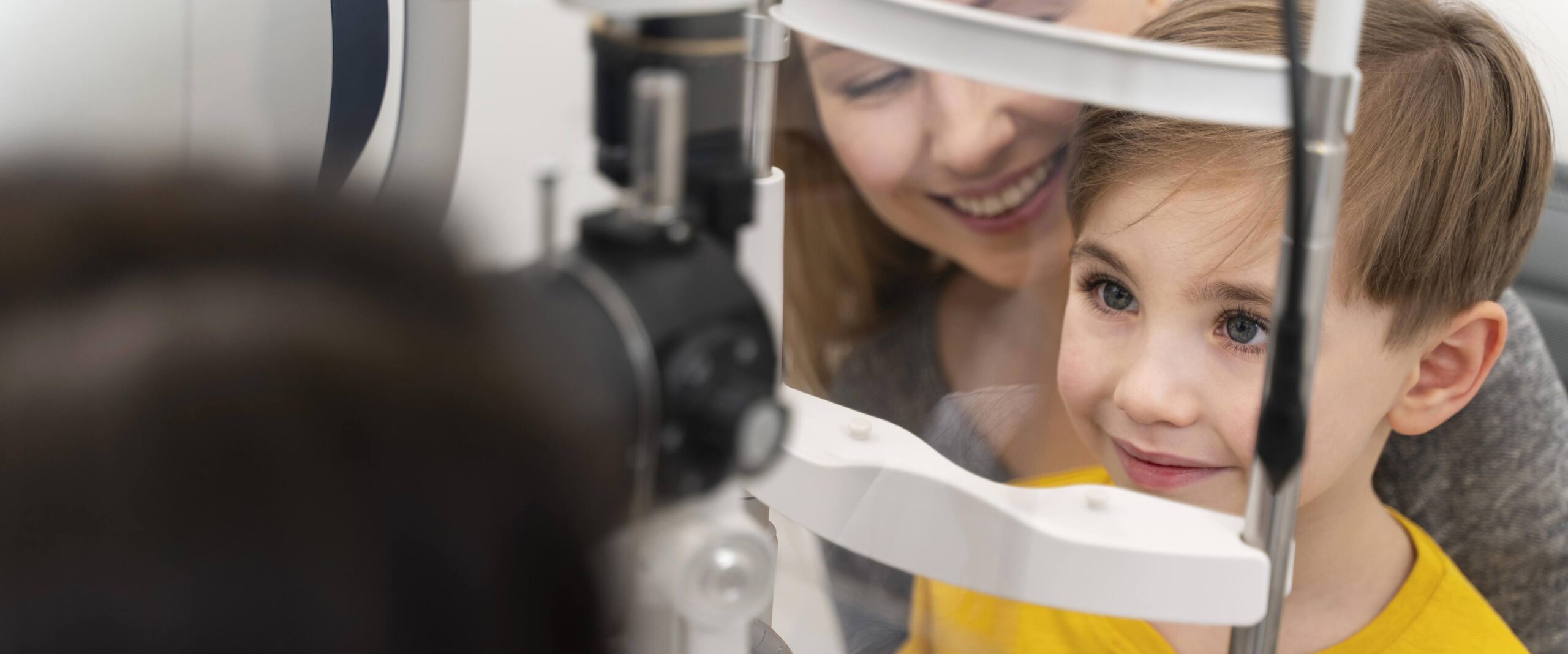
Common Eye Conditions in Children
Children can experience several common vision problems. Identifying these early can help ensure they receive the right advice and support.
Short-sightedness (myopia)
Short-sighted children can usually see nearby objects clearly, but things in the distance may appear blurred. They might struggle to see the classroom board, recognise people across a room or follow activities on a sports field.
Short-sightedness can often be corrected with glasses or, where appropriate, contact lenses.
Long-sightedness (hyperopia)
Long-sightedness can make close-up tasks, such as reading, more difficult. Some children may experience blurred vision, headaches or tired eyes when concentrating.
Mild long-sightedness is common in children and may not require treatment. If it affects their vision or causes symptoms, the optometrist may recommend glasses or other appropriate management.
Astigmatism
Astigmatism occurs when the front surface of the eye or the lens inside it has an irregular curvature. This can cause blurred or distorted vision at different distances.
Children with astigmatism may experience headaches, eye strain or difficulty focusing. Glasses can often help correct the problem.
Squint (strabismus)
A squint occurs when the eyes point in different directions rather than looking at the same place together. It can sometimes be difficult to spot, particularly if it only happens occasionally.
A squint should be assessed by an eye care professional because it can affect how a child’s vision develops. Treatment depends on the cause and may include glasses or other specialist care.
Lazy eye (amblyopia)
A lazy eye develops when one eye does not develop normal vision during childhood. The brain may favour the stronger eye, meaning the weaker eye does not see as clearly.
Early detection is important because treatment is generally more effective when started during childhood. Depending on the cause, treatment may involve glasses, patching the stronger eye or other options recommended by an eye care professional.
Not every child with an eye condition will show obvious symptoms. Regular sight tests are therefore important even when your child seems to see perfectly well.
At Eyecare at Morrisons, we want to help parents feel confident about their children’s eye health. Here’s what to look out for, what happens during a child’s sight test and answers to some common questions.
Signs Your Child May Need an Eye Test
It isn’t always obvious when a child has a vision problem. Some children adapt to what they can see, while others may struggle without understanding why. Look out for these possible signs:
- An eye that appears to turn inwards or outwards, even if this only happens occasionally.
- Sitting too close to the television or holding books and tablets close to their face.
- Frequent eye rubbing or complaining of tired, uncomfortable eyes.
- Headaches, particularly after reading, writing or using a screen.
- Squinting or tilting their head to see things more clearly.
- Losing their place when reading or using a finger to follow words.
- Struggling at school, particularly with reading, copying from the board or concentrating on close-up tasks.
- Avoiding activities such as reading, drawing or sports because they find them difficult.
- Sensitivity to light, excessive watering or regularly closing one eye to see better.
Frequently Asked Questions About Children’s Eye Tests
What Happens During a Child’s Eye Test?
A children’s eye test is designed to check both how well your child can see and the health of their eyes. The appointment is adapted to their age and ability, so even younger children who cannot yet read can have their vision assessed.
During the appointment, the optometrist may:
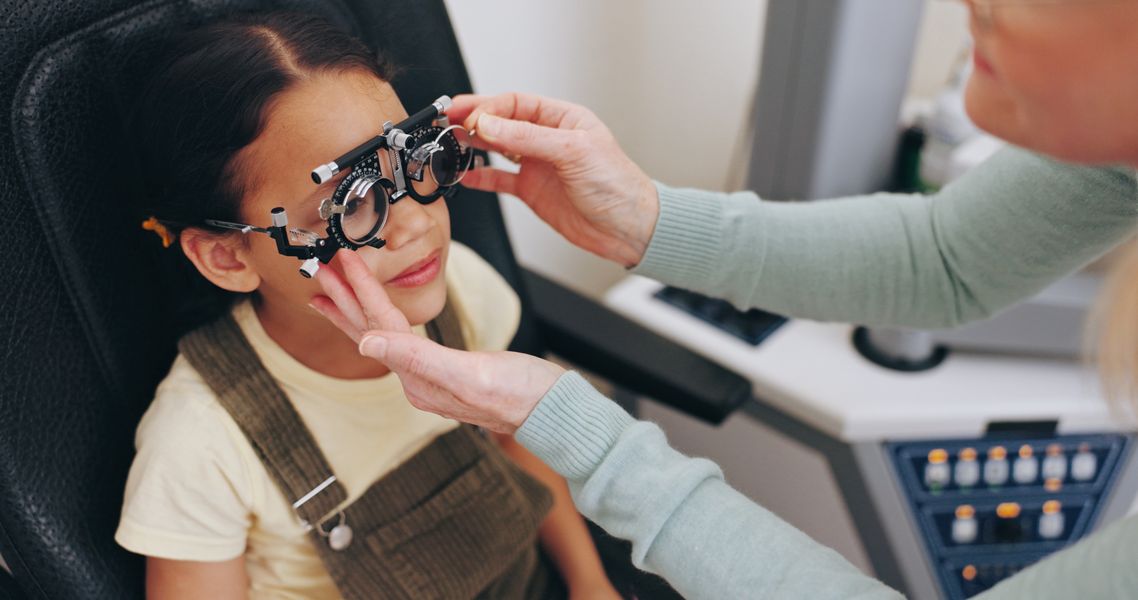
Some children may need additional tests depending on their age, symptoms or the findings of the examination. In certain cases, eye drops may also be recommended to help the optometrist assess their vision or eye health more accurately.
There’s no need for your child to be able to read or recognise letters before attending an eye test. The optometrist can use age-appropriate methods to make the examination as straightforward as possible.
Look After Your Child’s Eye Health
Good vision plays an important role in childhood development, learning and everyday activities. By looking out for changes in your child’s behaviour and keeping up with regular sight tests, you can help identify potential problems early.
If you’re concerned about your child’s eyesight, or they’re due for a routine check, speak to your local Eyecare at Morrisons team about arranging a children’s eye test.
Book a sight test today and help give your child the best possible start for healthy vision.
Find Us Between Aisles 8 and 10
Morrisons, Enterprise 5, Idle, Bradford
Fantastic offers available in-store including Free Kids’ And Teens’ Frame and Lenses up to £85 with an NHS Voucher.